Congebec: towards a paperless transformation
How Congebec improved document accuracy and streamlined compliance with BRCGS, SQF, and CFIA.
About
Congebec is a leading Canadian provider of cold and multi-temperature storage, warehousing, and distribution services. With a strong commitment to food safety and operational excellence, Congebec plays a key role in North American logistics markets. The company supports businesses in keeping their products safe and fresh while optimizing logistics and transportation from coast to coast. Backed by over 50 years of experience and a team of 550 dedicated employees, Congebec operates 16 modern and strategically located facilities across six provinces: Quebec, Ontario, Manitoba, Saskatchewan, Alberta and British Columbia. These facilities represent more than 65 million cubic feet of temperature-controlled space.
Industry
Storage and distribution
Company size
250-999 employees
Headquarters
Quebec City, Quebec
Founded
1974
Quick summary
Challenge
Paper-based food safety system caused inefficiencies, errors, audit challenges, and excess paperwork.
Solution
By adopting Paperless Forms, Congebec digitized and standardized its compliance processes, enabling real-time data entry and automated error detection.
Results
Congebec has improved document accuracy, streamlined BRCGS, SQF, and CFIA compliance, increased audit readiness, and improved issues management in real time. These efficiencies have translated into significant time savings across teams.
Project context
Founded in 1974, Congebec has grown into one of Canada’s leading providers of cold and multi-temperature storage, warehousing, and distribution services. In 2025, the company expanded its network through the acquisition of Bradner Cold Storage in British Columbia, adding five facilities to the 11 it already operated. Today, Congebec operates 16 facilities across six provinces, employing more than 550 people nationwide.
With more than 65 million cubic feet of temperature-controlled storage capacity, the company plays an important role in keeping food products safe across the North American supply chain.
Food safety and compliance are central to these operations. Congebec facilities must comply with strict regulatory and industry standards, including CFIA oversight and certification programs such as BRCGS (Brand Reputation through Compliance Global Standards).
Meeting these requirements generates a significant volume of documentation. For a company responsible for millions of cubic feet of food storage, maintaining accurate and reliable records is essential to ensure food safety and regulatory compliance.
For many years, these records were managed manually using paper forms.
Challenge
While the paper-based system was familiar and functional, it gradually created operational challenges as the company expanded.
Time-consuming record-keeping
Employees had to manually fill out forms, increasing the risk of delays and errors.Audit preparation
Regulatory inspections required significant time and effort to compile necessary documents.High paper consumption
The reliance on physical forms resulted in excessive paperwork and storage needs.Limited real-time visibility
Supervisors had to rely on delayed or incomplete data to assess food safety risks.
As the company expanded, documentation became increasingly difficult to manage.
Congebec had greater ambitions and wanted to give its teams the means to realize them. Thus, in 2018, the company undertook to digitize its quality processes with Paperless Forms.

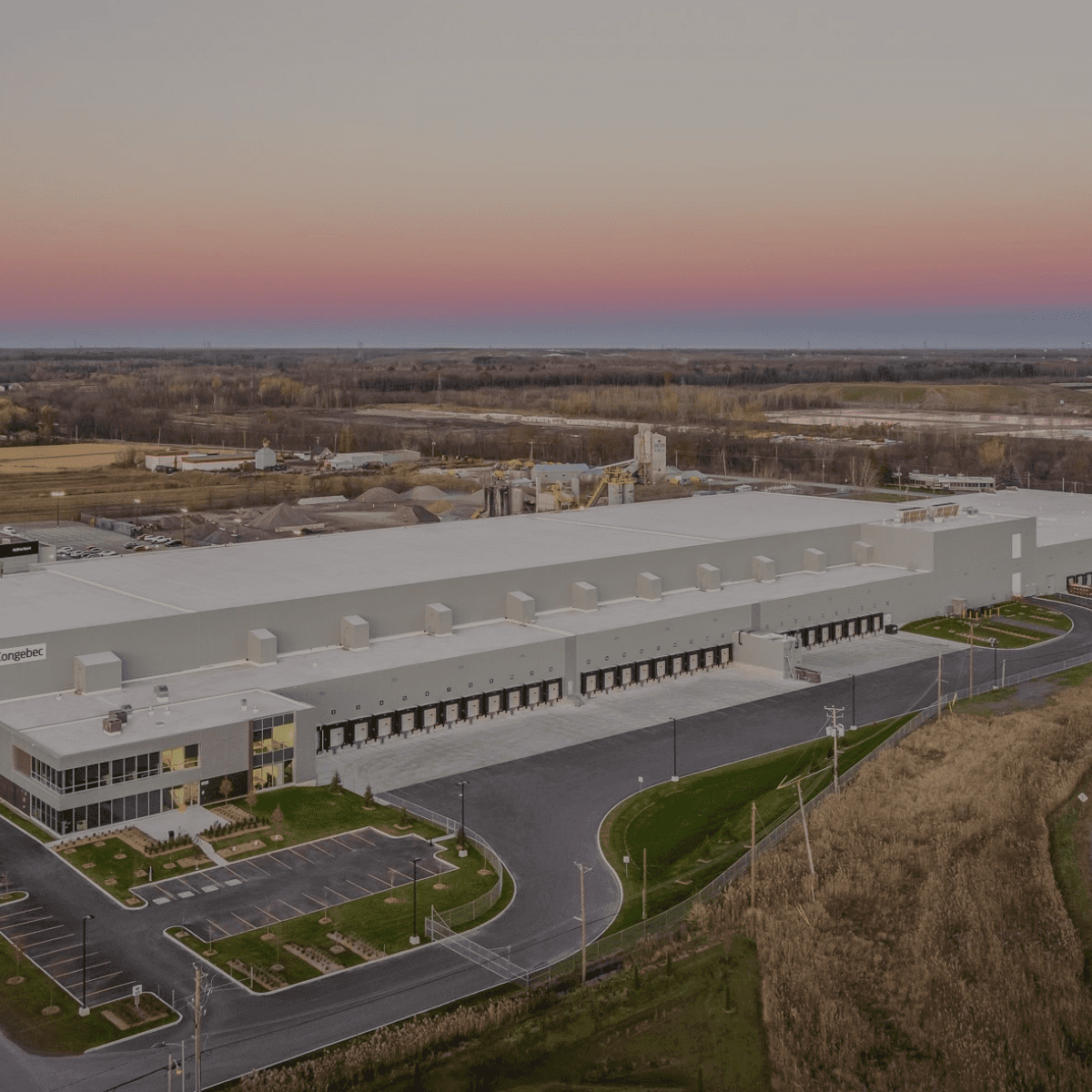
Image. Congebec freezer building expansion
A shift to a digital system
The deployment of Paperless Forms was carried out over a period of six months. It began with a three-month on-site pilot phase, followed by a phased rollout across sites.
Project structure and team roles
The project started with the QA, Operations, and Maintenance departments, along with a core group of pilot users. Each site initially received one or two licenses, allowing profiles to be created according to the number of managers at each location.
Roles were defined as follows:
QA: content ownership and validation
Operations and Maintenance: execution
IT / Analytics: technical support
Managers: project sponsors
Team support
Adoption was supported through several mechanisms. A network of super-users was established within the QA team and among key on-site personnel, on-site support was provided during the first days of deployment, and a feedback channel allowed teams to quickly adjust the forms based on operational needs. The team also benefited from the support of a Datahex manager, who assisted with the implementation and adaptation of the forms.
Digitization of quality processes
Deployment initially focused on high-frequency, high-risk forms, particularly those required as audit evidence or related to critical control points. Additional processes were gradually added, including corrective actions, enabling the full execution of the quality program (HACCP, BRCGS, SQF), as well as task completion, follow-ups, verifications, and continuous improvement actions.
Processes covered: QA system, HACCP/PRP/BRCGS/SQF controls, deviation management and proof of execution; real-time access to records for audits and investigations, also covering activity traceability and document archiving for more than two years.
Types of forms used: inspections, temperature checks, sanitation checks, receiving and shipping controls, equipment calibration, non-conformity management, hold and release procedures, destruction records, document control, training records, internal audits, and recall management.
Gradual rollout and adoption
The deployment followed a wave-based approach to stabilize the forms and ensure team buy-in. Rollout was conducted in stages, starting with processes, then teams, and finally sites, with gradual adoption based on the risk level and criticality of operational tasks.
Standardizing BRCGS practices across sites
Following the acquisition of Bradner Cold Storage in British Columbia, Congebec needed to better align food safety practices and documentation across its facilities.
Initial situation after acquisition
At the time of the acquisition, sites were aligned with SQF requirements. The requirements themselves were common, but the documentation and supporting evidence varied between facilities, including differences in form versions, execution frequency, responsibilities, and archiving practices. Each site had developed its own variations. However, digital forms made standardization simpler and easier to implement.
The heterogeneity of practices between sites complicated audits and comparisons. The adoption of a common language and standardized templates therefore made it possible to implement a single system. This harmonization also enabled employees from different sites to support other facilities when needed, since they were already familiar with the system and used the same forms.
Establishment of common standards
To harmonize SQF and BRCGS practices and documentation across the group, several measures were implemented.
These included:
creation of common master forms (templates) with governance rules covering ownership, approval, and version control
mapping of each form to its corresponding SQF and BRCGS requirement and expected audit evidence
harmonization of execution frequencies and mandatory fields
deployment of the same standards in Paperless Forms across all sites
inter-site reviews and an internal audit schedule to verify implementation
Standardization actions
Field teams played an important role in the evolution of the system. They contributed to the co-design of forms by validating operational steps, simplifying fields, and identifying the most relevant evidence required during audits.
Managers ensured discipline during implementation and helped maintain alignment between procedures and operations by:
setting the switchover date
tracking task completion
recognizing improvements achieved by their teams
By supporting employees daily, managers developed a deeper understanding of operational tasks, constraints, and critical control points, helping align forms and expected evidence with real workflows.
Share of best practices
Sites already using Paperless Forms helped support other facilities during the rollout. More mature sites acted as pilot locations and shared templates and lessons learned through:
inter-site workshops
a shared form bank
cross-training sessions
support during the first post-deployment audits
This collaboration helped accelerate adoption and maintain consistent standards across the organization.
Concrete benefits
Since implementing Paperless Forms, Congebec has achieved significant operational improvements:
Reduction in evidence search time (audit)
Search time has dropped from 5 minutes to 5 seconds, while form completion rates increased to 95% and incomplete or illegible forms declined.Improved traceability and responsiveness
Near real-time visibility, standardized records and evidence, and more rigorous monitoring of deviation and corrective actions.Operational gains
Reduced printing and archiving, fewer duplicate entries, and easier demonstration of compliance during client, BRCGS, SQF, and CFIA audits.Increased efficiency across teams
Less time spent on paperwork for warehouse employees, supervisors, and quality assurance teams, allowing greater focus on operations.Reduction in paper usage
Lower paper consumption and storage needs, supporting Congebec’s sustainability commitments.
Why choose Paperless Forms
By digitizing their processes with Paperless Forms, Congebec has strengthened both operational efficiency and food safety oversight. Just as importantly, the company has created a foundation that can continue evolving as its operations grow.
In an industry where accuracy, traceability and speed are essential on a daily basis, having the right systems is an asset that makes all the difference.
“Our experience with Paperless Forms by Datahex has been enriching. Not only do we feel confident that we can manage efficiently our documents as they should be, but we also enjoy working with a company that views innovation as an ongoing process rather than a once-and-done event.”
Carolina Téllez, quality assurance director
Congebec
Want to achieve the same results?
Transform your food safety management today!
Request a free personalized consultation.
Read our other
case studies

Food Manufacturing and Processing
Olymel: from paper to digital food safety
Food Manufacturing and Processing
Baugher Ranch Organics: Improving documentation and audit readiness


Food Manufacturing and Processing
Groupe MAG: efficiency guided by data


Food Manufacturing and Processing
Jowett Farms: a smooth transition to paperless records
Food Manufacturing and Processing
Boulart: a quality culture driven by teams

Storage and distribution
Congebec: towards a paperless transformation